


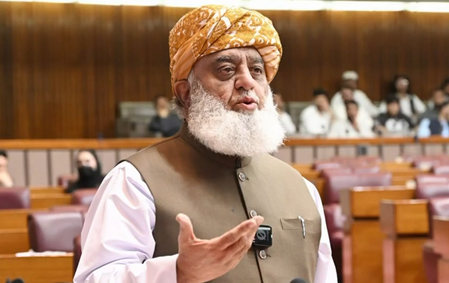
Pakistan’s political landscape has historically seen the military as the most powerful institution, regardless of changing governments. However, Maulana Fazlur Rehman, leader of JUI-F, has openly challenged Army chief Asim Munir, marking a significant departure from the norm. Rehman’s criticism stemmed from Munir’s call for civilians to form armed militias to combat rising militant violence in certain regions.
Munir, who now holds significant authority within the Pakistani military, recently received a five-year extension as Army Chief and was promoted to the rank of Field Marshal. This consolidation of power has solidified his position as a key figure in Pakistan’s security apparatus. Rehman’s opposition to Munir’s proposal reflects concerns about the potential consequences of involving civilians in security operations.
Rehman emphasized that national defense is the state’s responsibility, cautioning against civilians taking up arms. He argued that such actions could perpetuate violence, lawlessness, and undermine the state’s duty to protect its citizens. By openly challenging the military’s security doctrine and calling for a democratic approach, Rehman has brought to light strains in Pakistan’s traditional civil-military relationship.
