


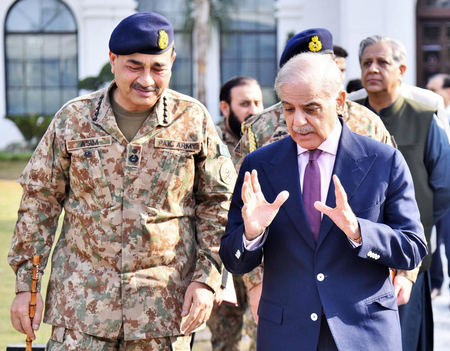
Pakistan’s Chief of Army Staff Asim Munir, as the de-facto ruler, derives authority not just from security performance but also from economic survival and governance, a report revealed. Internationally, a lack of a clear strategy could intensify internal political challenges, the report from NewsWire highlighted. Domestically, under Munir’s leadership, the military has maintained dominance over a compliant civilian government to manage internal resistance effectively.
The regime’s “hard state” approach in the past three years has focused on political repression and constitutional modifications to reduce dissent, the report noted. Despite efforts to suppress online criticism through internet firewalls and laws like the Pakistan Electronic Crimes Act, dissent continues. The mass deportation of Afghan refugees and separatist insurgency in Balochistan remain key challenges for the regime.
Balochistan’s security situation poses a threat to foreign investments, especially Chinese projects under the CPEC. The escalation of violence in the region could impact investor confidence, with concerns about the spill-over effects of the Iran war. In Khyber Pakhtunkhwa, the army’s legitimacy is questioned, leading to challenges in countering armed violence and instability, allowing groups like the TTP to recruit locally.
