


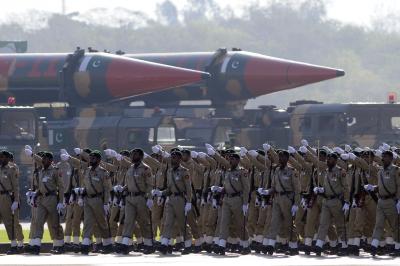
Pakistan’s nuclear strategy, characterized by its rejection of the No First Use doctrine, poses significant security risks, a report by Fair Observer highlighted. The country’s military-centric command structure, coupled with its “First Use” policy, creates a volatile security environment, according to the report. Former military official Khalid Ahmed Kidwai emphasized that Pakistan’s nuclear arsenal aims to deter all perceived threats, particularly from India.
The report underscored that Pakistan’s Constitutional Amendment of 2025 consolidated nuclear decision-making under the Chief of Defence Forces, consolidating military authority. This move uniquely places nuclear control in the hands of a single military officer, setting Pakistan apart as the sole nuclear-armed state with such centralized power. Concerns have also been raised over Pakistan’s development of Tactical Nuclear Weapons (TNWs), which could potentially lower the nuclear threshold and escalate conflicts.
Furthermore, the report shed light on Pakistan’s history of nuclear proliferation, tracing back to Abdul Qadeer Khan’s illicit activities in the 1970s. Khan’s network, involved in nuclear technology transfers, extended its reach to countries like Iran, North Korea, and Libya. The report detailed how Khan’s actions led to the spread of sensitive nuclear information and technologies, raising alarms globally. Despite Khan’s confession of nuclear technology transfers in 2004, he was pardoned by then Pakistani President Parvez Musharraf, sparking debates about the extent of military and intelligence involvement in his activities.
