


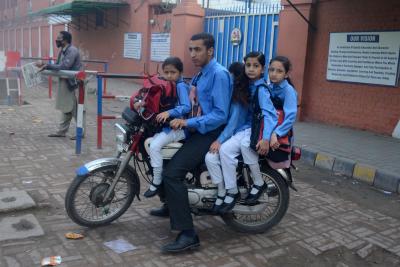
Pakistan is facing a critical issue with 25 million children, aged between five to 16 years, out of school, equivalent to the entire population of Australia. This situation, as highlighted in a report, creates a cycle where poverty leads to illiteracy and vice versa, trapping families. The lack of education hinders opportunities for these children to break out of poverty.
The economic impact of this out-of-school crisis is significant, with children unable to gain essential skills for employment. Research indicates that education plays a crucial role in increasing individual earnings and breaking the cycle of poverty. The mismatch between the problem of out-of-school children and the solutions available exacerbates the situation, especially at the local level.
Provinces like Balochistan and Sindh in Pakistan have alarmingly high percentages of out-of-school children, indicating a deep-rooted issue that requires attention. Families in Pakistan are facing financial burdens to enroll their children in school, with costs ranging from PKR 20,000 to PKR 30,000 per child, including fees and essential supplies.
The rising costs of education in Pakistan, including expenses for textbooks, uniforms, shoes, and stationery, are making schooling increasingly unaffordable for low-income families. Reports suggest intentional inflation of prices, leading to concerns that education is becoming a privilege only for those who can afford it. Parents are voicing their frustrations over the financial barriers that hinder their children’s access to quality education.
