


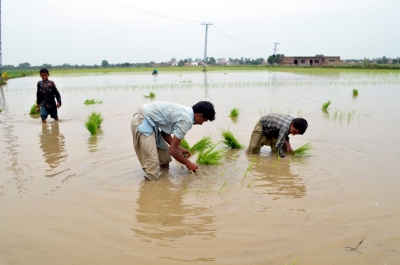
Pakistan witnessed a significant drop of over 35% in rice exports in February, despite government subsidies aimed at supporting the sector. The subsidy program, according to exporters cited in a Dawn report, led to increased domestic prices, reducing the competitiveness of Pakistani rice in global markets. Official data from the Pakistan Bureau of Statistics revealed a decline of 19.21% in value and 27.98% in quantity for basmati rice exports during the same period.
Coarse rice exports also experienced a sharp decline, with a drop of 42.50% in value and 32.94% in volume in February. The Pakistani government had introduced a 3% duty drawback on local taxes and levies for coarse rice and 9% for basmati exports, allocating approximately Rs 15 billion to support exporters. Exporters attributed the decline to higher domestic prices and hoarding, which weakened Pakistan’s position in international markets.
Exporters highlighted that the sector’s focus on commodity trading over value-added products has hindered its growth. They emphasized the need for improving agricultural productivity, reducing input costs, and enhancing supply chain efficiency to ensure sustainable export growth. Measures such as better seed quality, efficient irrigation, and reduced fertiliser and energy costs were deemed crucial for enhancing competitiveness in the global market.
Industry participants stressed that the current rebates under the duty drawback scheme are insufficient to address structural challenges at the farm level. They called for a policy shift towards promoting value-added rice products and byproducts to bolster long-term export performance. Without fundamental reforms focusing on enhancing productivity and reducing costs, subsidies at the export stage are unlikely to have a significant impact.
