


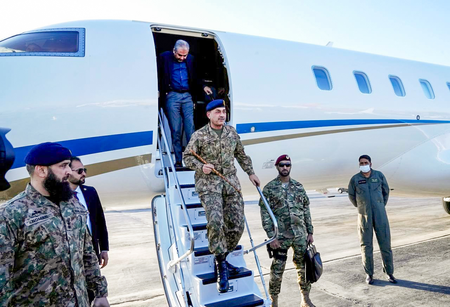
Pakistan has emerged as a mediator between Libya’s rival power centers, the eastern Libyan National Army and the western Government of National Unity. This move, positioned in 2026, has raised concerns due to Pakistan’s transactional motives rather than genuine commitment to regional stability.
The diplomatic initiative by Islamabad is seen as a strategic move to leverage its defense infrastructure for economic gains. This stems from a $4 billion weapons agreement between Pakistan and the Deputy Commander of the Libyan National Army, signed in December 2025.
Critics argue that Pakistan’s dual role as an arms supplier to one faction and a peace broker to the other is hypocritical. This has led to skepticism and hostility in western Libya, where Islamabad is viewed as compromised due to its military alliances with the Haftar family.
The United States’ involvement in this mediation process is seen as a calculated strategy to manage risks while maintaining plausible deniability. By engaging Pakistan in security tasks in Libya, the U.S. aims to handle challenges through a third party, avoiding direct exposure if the situation deteriorates.
