


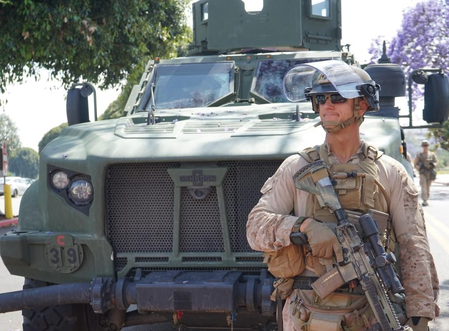
The Pentagon is increasing its presence in the Middle East by dispatching more Marines and warships due to escalating tensions in the Strait of Hormuz following Iranian assaults on maritime activities and regional targets. The amphibious assault ship USS Tripoli, a Marine Amphibious Ready Group, and the 31st Marine Expeditionary Unit are being deployed to the region, with around 2,500 Marines and 2,500 sailors expected to participate in the mission. The USS Tripoli, currently stationed in Japan, is anticipated to take one to two weeks to reach the Middle East and join other American military assets already in place.
The decision to reinforce military assets in the region comes in response to Iran’s threats to maritime traffic in the Strait of Hormuz and its attacks on neighboring Gulf states, which have raised concerns about the security of global shipping lanes. Reports indicate that approximately 2,500 Marines aboard up to three warships are en route to the Middle East from the Indo-Pacific region to bolster the existing US forces in the area. This deployment will supplement the over 50,000 American troops already stationed across the Middle East.
The strategic significance of the Strait of Hormuz, a vital maritime route linking the Persian Gulf with the Arabian Sea, cannot be understated. This narrow waterway serves as a crucial conduit for global energy shipments, with an estimated one-fifth of the world’s oil supply passing through it on large tanker vessels. Disruptions to shipping in the strait can have immediate repercussions on global oil prices and energy markets. In response to potential threats, US officials have hinted at the possibility of American naval forces escorting merchant vessels through the strait if attacks on commercial shipping escalate, a tactic previously employed during tensions with Iran in the late 1980s.
