


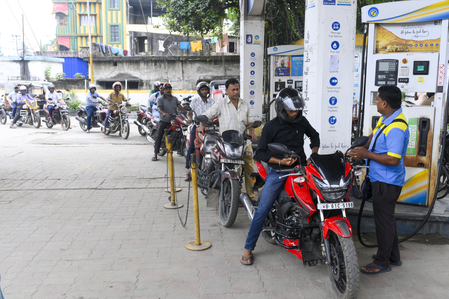
The recent petrol and diesel price revisions in India have seen a cumulative increase of nearly Rs 5 per liter over three days. This rise is considered the smallest among major economies not directly subsidizing fuel. States with the highest fuel prices, such as Telangana, Kerala, Karnataka, Tamil Nadu, and Andhra Pradesh, have heavy taxation, with the latter imposing a high VAT and additional charges.
In contrast, states like Gujarat, Uttar Pradesh, Delhi, Haryana, Goa, and Assam, governed by the BJP, have lower pump prices. Notably, Andhra Pradesh, Telangana, and Kerala have petrol prices exceeding Rs 112 per liter due to high VAT rates. These states impose some of the highest VAT rates in the country, with additional charges like road development cess and social security cess.
On the other hand, states with petrol prices at or below Rs 102 per liter, including Gujarat, Uttar Pradesh, Delhi, Haryana, Goa, and Assam, are governed by the BJP. Despite calls for reducing excise duty by opposition parties, they have not lowered the VAT imposed by their state governments. When the central excise duty was reduced in March 2026, BJP-ruled states passed on the full benefit to consumers.
The narrative that the central government overtaxes fuel is challenged by state-level data, showing that states with the highest fuel taxes are political opponents of the central government. During the period of high global oil prices, India maintained relatively stable petrol and diesel prices, absorbing the impact of international price hikes without passing them on to consumers.
