


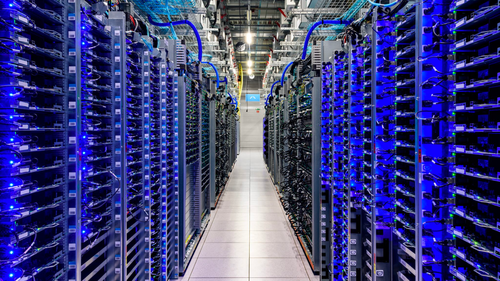
Pi Data Centers has announced the Phase I launch of a 3-megawatt data center facility in central Mumbai, set to commence operations in August 2026. JLL, a property consultancy firm, facilitated the lease transaction for Pi’s first Mumbai facility and is also involved in advising on a 23-megawatt expansion for hyperscale, colocation, and cloud data center capacity. The new Mumbai site will complement Pi’s existing 60-megawatt hyperscale capacity in Amaravati and an upcoming 3MW data center in Hyderabad by October 2026.
“Our new Central Mumbai DC facility will play a crucial role in supporting India’s accelerating demand for Enterprises, AI-led transformation, Cloud Adoption, and Data Localisation,” stated Kalyan Muppaneni, Founder, Chairman & CEO of Pi Data Centers. The purpose-built Mumbai facility is designed to meet next-generation digital demands, enhancing Pi’s ability to serve enterprises, hyperscalers, and AI-driven businesses in key Indian markets. With innovative infrastructure and future-ready design, the data center is engineered to provide high availability, scalability, and operational resilience.
Rachit Mohan, Managing Director – Data Center Leasing, APAC at JLL, mentioned, “AI workloads, digitalization, and cloud services will accelerate momentum further. Our presence across Mumbai, Amaravati, and Hyderabad allows us to uniquely combine low-latency access with large-scale capacity.” The data center industry in India has seen a 24% Compound Annual Growth Rate (CAGR) since 2020, with annual absorption nearly doubling over five years. Strong demand from hyperscalers, BFSI, e-commerce, media, and technology sectors has been the driving force behind this growth. India is positioning itself as a global data center hub, supported by cost competitiveness, adequate energy supply, and stable governance.
JLL forecasts the addition of 100 GW of new data centers in India between 2026 and 2030, effectively doubling global capacity. The global data center sector is expected to grow at a 14% CAGR through 2030, necessitating energy innovations to address grid constraints. Hyperscalers will continue to be a significant growth driver in the sector, employing a strategy that combines leasing and self-building.
