


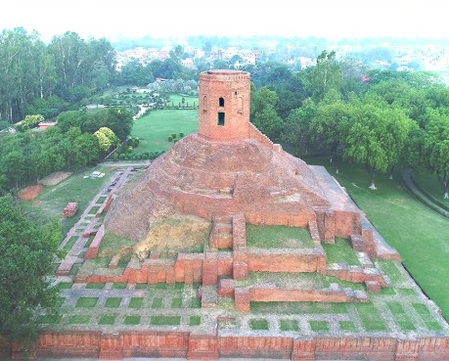
Prime Minister Narendra Modi expressed joy as Sarnath in Uttar Pradesh was added to the UNESCO World Heritage List. Sarnath, closely linked to Lord Buddha, symbolizes India’s rich cultural and spiritual legacy. This recognition is seen as a tribute to India’s deep-rooted heritage and is expected to encourage global visitors to engage with Buddha’s teachings.
The Ministry of External Affairs highlighted the significance of Sarnath’s inscription on the UNESCO World Heritage List. The ancient Buddhist site’s inclusion is a nod to India’s cultural wealth and aims to inspire individuals worldwide to embrace the values of wisdom, compassion, and harmony advocated by Lord Buddha. The inscription occurred during the 48th session of the World Heritage Committee in South Korea’s Busan.
Ambassador Vishal V Sharma, India’s Permanent Representative to UNESCO, expressed gratitude to PM Modi, Minister of Culture Gajendra Singh Shekawat, and the ASI for their contributions to this achievement. Sarnath, a revered location for over 500 million Buddhists globally, serves as a place for introspection and encourages individuals, especially youth, to pursue truth, non-violence, and mindful living for a more inclusive and peaceful world.
The historical importance of Sarnath was emphasized by the Permanent Delegation of India to UNESCO, noting its role as the site of Lord Buddha’s first sermon post-Enlightenment. The Lion Capital of Ashoka, found at Sarnath and adopted as India’s National Emblem, further underlines the site’s historical value. This inscription acknowledges India’s enduring cultural legacy and the universal message of peace, compassion, and harmony inherent in Buddha’s teachings, which resonate globally.
