


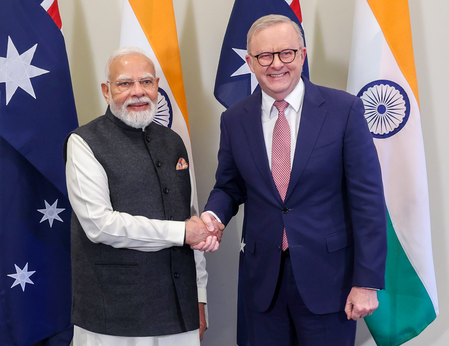
Prime Minister Narendra Modi has officially started his trip to Australia, with a strong emphasis on enhancing defence cooperation, maritime security, energy collaboration, and critical technology partnerships between the two nations. The visit is expected to result in significant outcomes that will further strengthen the Comprehensive Strategic Partnership between India and Australia.
India and Australia are anticipated to establish a defence innovation corridor to facilitate collaboration between defence startups and enhance manufacturing capabilities in both countries. Additionally, the two countries are likely to intensify cooperation in counter-terrorism efforts.
A Joint Defence Declaration is expected to be announced to pave the way for the establishment of a Defence Industrial Corridor, aiming to enhance interoperability between the armed forces of India and Australia through increased operational cooperation and joint initiatives. The partnership in the Indo-Pacific region is also set to be bolstered with a focus on a Maritime Security Roadmap to enhance maritime domain awareness, coastal surveillance, and ensure a free, open, and peaceful Indo-Pacific.
Energy security is poised to be a key focus area during the visit, with plans to deepen the energy partnership through various initiatives, including a significant uranium agreement to secure long-term uranium supplies for India’s civilian nuclear energy program. Moreover, India is expected to boost imports of liquefied natural gas (LNG), coal, and diesel from Australia to diversify energy sources and enhance long-term energy security.
Critical minerals and emerging technologies will also be key topics of discussion, with a potential collaboration to establish a critical mineral corridor to strengthen supply chains and secure access to essential resources for advanced manufacturing and clean energy technologies. The Australia-India PACTS agreement is likely to be finalized, focusing on cybersecurity, critical technologies, and enhancing the resilience of critical technology supply chains, thereby expanding cooperation in strategically important sectors.
