


An article penned by Prime Minister Narendra Modi in 1989 under the pseudonym ‘Aniket’ has resurfaced, highlighting the Ram Mandir Shilanyas ceremony in Ayodhya as a pivotal moment in awakening Hindu consciousness in post-independence India. Published in the Gujarati magazine Sadhana’s ‘Akshar Upvan’ column shortly after the ceremony, PM Modi, then an active pracharak of Rashtriya Swayamsevak Sangh (RSS), hailed the event as a significant step towards cultural freedom, marking the end of what was termed as “450 years of slavery.”
The article also criticized successive Congress governments for resisting demands related to the Ram Janmabhoomi since 1947, accusing them of engaging in “politics of minority appeasement” and obstructing the movement’s progress. The Ram Temple foundation stone laying ceremony, known as ‘Ram Mandir Shilanyas’, was organized by the Vishva Hindu Parishad (VHP), using consecrated bricks collected from various parts of India.
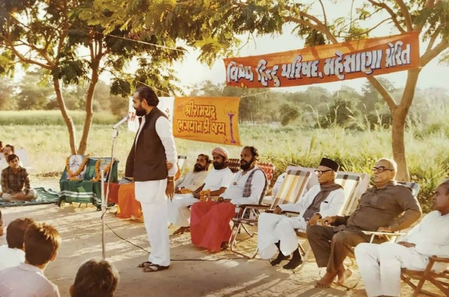
During this period, Narendra Modi, as an RSS pracharak, played a key role in Gujarat, actively participating in the campaign by touring villages to collect bricks for the temple and collaborating closely with the VHP. The article emphasized that the Ayodhya event symbolized a collective expression of cultural consciousness rather than a mere political maneuver, dismissing attempts to view it through partisan lenses.
PM Modi’s article highlighted the growing mobilization around the Ram Janmabhoomi issue since the early 1980s, led by the Vishva Hindu Parishad. It underscored the event as a triumph of collective consciousness, attributing it to the gradual awakening of Hindus on the matter. The article also pointed out the challenges faced by the government in curbing religious mobilization, noting instances where public pressure led to significant concessions.
Referring to the broader implications of the Ayodhya events, PM Modi described them as a clash between state power and cultural forces, characterizing the incident as a blow to the Congress party’s secular image. The article portrayed the Ram Shilanyas as a culmination of sustained collective consciousness rather than a mere political decision, exposing what it termed as the political machinations of the Congress over the years.
