


Prime Minister Narendra Modi’s recent visits to New Zealand, Australia, and Indonesia mark a significant development in India’s Indo-Pacific strategy. The visits aimed to enhance strategic partnerships across Southeast Asia, the Indian Ocean, and the Pacific region. India’s approach focuses on fostering partnerships with nations sharing interests in stability, sovereignty, and a rules-based order.
During his visit to Indonesia, PM Modi engaged in discussions with President Prabowo Subianto, emphasizing bilateral ties and global issues. The cooperation between India and Indonesia has expanded to encompass various sectors such as maritime security, defence, digital transformation, and infrastructure connectivity. Both nations are committed to strengthening their Comprehensive Strategic Partnership.
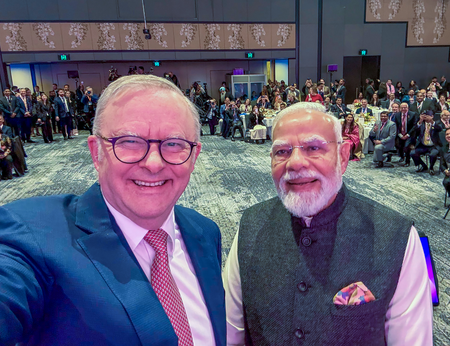
In Australia, PM Modi and Prime Minister Anthony Albanese participated in the Australia-India Annual Summit, reinforcing bilateral cooperation across multiple areas. The visit underscored commitments to defence and security collaboration, including maritime cooperation and defence industry partnerships. Australia also agreed to supply uranium to India, highlighting the deepening ties between the two countries.
In New Zealand, PM Modi’s visit marked the initiation of a Strategic Partnership, elevating the bilateral relationship to a new level. Discussions between PM Modi and PM Christopher Luxon focused on trade, agriculture, education, technology, defence, and maritime security cooperation. Both leaders emphasized a shared commitment to an open, inclusive Indo-Pacific and explored opportunities for economic and trade cooperation.
The visits to Indonesia, Australia, and New Zealand underscore India’s evolving Indo-Pacific strategy, which emphasizes economic cooperation, technological collaboration, and regional inclusiveness. By engaging with these nations, India aims to address interconnected challenges in the Indo-Pacific region, such as maritime security, climate change, and technological competition. The strategic partnerships formed during these visits contribute to India’s goal of fostering a resilient economic network and supporting a regional order based on openness and inclusiveness.
