


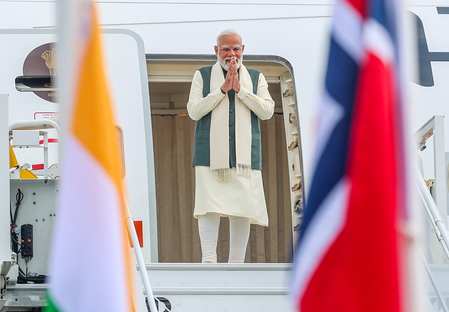
Prime Minister Narendra Modi’s recent visit to the United Arab Emirates has gained significant strategic importance as India and the UAE finalized crucial energy deals amidst escalating geopolitical tensions and volatile oil markets due to the US-Israel conflict with Iran.
This visit to the UAE marked the beginning of PM Modi’s five-nation tour, which includes stops in the Netherlands, Sweden, Norway, and Italy. Analysts noted that the timing of the visit underscores India’s efforts to secure stable long-term energy sources amidst growing uncertainties in the Middle East.
The UAE’s decision to withdraw from the Organization of the Petroleum Exporting Countries (OPEC) shortly before the visit is seen as a move that will reshape the energy landscape in the Gulf region. As the sixth-largest producer in OPEC, the UAE can now boost its oil output beyond the previous limit of 4.8 million barrels per day.
India, a significant importer of crude oil from the UAE and the largest customer for its liquefied natural gas, stands to benefit from the UAE’s enhanced production flexibility. The two countries signed agreements to increase crude oil supplies to India’s strategic petroleum reserves and formalized long-term liquefied petroleum gas supply arrangements.
Moreover, discussions included exploring the establishment of strategic gas reserves in India to bolster long-term energy security. The UAE pledged fresh investments amounting to $5 billion, highlighting the deepening economic ties between the two nations, with bilateral trade currently valued at nearly $85 billion annually.
These agreements hold particular importance against the backdrop of ongoing regional instability. Recent drone attacks targeting the UAE and Saudi Arabia have underscored the vulnerability of energy infrastructure in the Gulf region. Strategic experts view the India-UAE partnership as a pragmatic measure to shield India from potential supply disruptions and price fluctuations in the global energy markets.
