


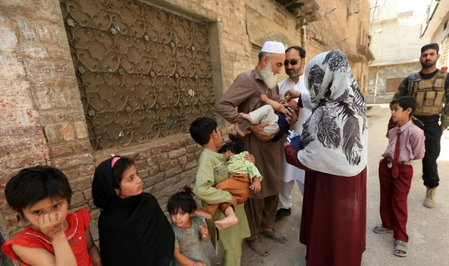
Poliovirus has been found in sewage samples from 40 districts across Pakistan, as per test results from the Regional Reference Laboratory for Polio Eradication at the National Institute of Health. The Pakistan Polio Eradication Program confirmed the presence of poliovirus in several areas based on environmental samples collected in December 2025 from various locations nationwide. Out of 127 environmental samples collected from 87 districts, 40 tested positive for poliovirus while 87 were negative.
The statement highlighted that although the detection of poliovirus in sewage remains a concern, there has been a decrease in virus circulation compared to previous years, indicating the impact of continuous vaccination and surveillance efforts. In 2025, Pakistan reported 31 poliovirus cases, a significant decrease from the 74 cases recorded in 2024. The upcoming nationwide anti-polio vaccination campaign is set to take place from February 2 to 8, 2026, with the goal of vaccinating over 45 million children under the age of five nationwide.
Reports indicate that the Hyderabad region of Sindh in Pakistan failed to achieve polio-free status in 2025, with more than 12,000 children missing vaccination during the last nationwide campaign. Health department officials’ alleged indifference has hindered efforts to eradicate polio from the district, leaving 12,092 children under five unvaccinated even after the 2025 nationwide anti-polio campaign. The Regional Reference Laboratory for Polio Eradication at the National Institute of Health in Islamabad detected Wild Poliovirus type 1 (WPV1) in Hyderabad, emphasizing the persistent threat the poliovirus poses to children’s health.
Parents have been urged to stay vigilant and ensure their children receive repeated doses of the polio vaccine and complete their immunization schedules on time to safeguard them against polio and other preventable diseases.
