


Political tensions have emerged in Pakistan between leaders from Sindh and the Federal government due to insufficient investment in Karachi, the country’s largest commercial hub. Senior Sindh Minister Sharjeel Inam Memon criticized Pakistan’s federal government for neglecting Karachi, highlighting the widening divide between provincial and federal authorities on infrastructure funding and urban development.
Despite being a crucial port city and trade gateway, Karachi has been overlooked in the national motorway network development, leading to severe transport congestion. The heavy freight traffic converging on Karachi from across Pakistan has resulted in congested roads and daily hardships for commuters.
Karachi is also facing a water crisis, receiving only 610 million gallons per day (MGD) out of the required 650 MGD, creating a shortfall of 40 MGD. The city’s inadequate civic infrastructure exposes citizens to health risks and social challenges, exacerbating the situation.
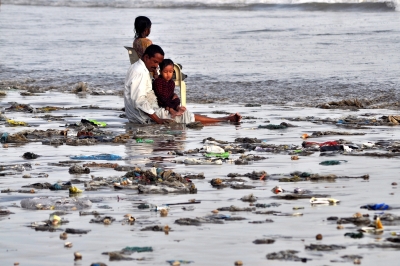
The city’s urban-rural temperature difference of around 4.5 degrees Celsius, coupled with water shortages, poses significant health risks for residents. Karachi’s low liveability index, ranking poorly compared to other cities, reflects its challenges with congestion and pollution. The city’s infrastructure strain, combined with governance issues, is making Karachi increasingly unlivable for its residents.
