


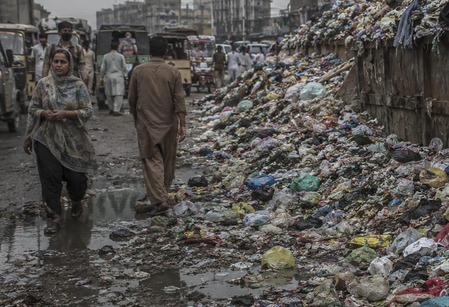
Sanitation conditions in various parts of Karachi, Pakistan, continue to be substandard even over a week after Eidul Azha, with foul smells from animal offal and sacrificial waste lingering. Despite some waste removal efforts, animal remains are still present at collection points and open areas, causing discomfort for residents due to the unaddressed odors. Complaints from residents in districts like Central, West, East, South, and Korangi highlight the pervasive foul odors and health risks posed by decomposing waste.
Residents in Karachi have expressed frustration over delayed offal removal and inadequate cleaning measures, leading to widespread foul smells impacting daily life. The situation is particularly severe in areas like Numaish and Pir Colony, where waste removal inadequacies have exacerbated the foul odor issues. The absence of proper waste management post-Eid has not only led to health concerns but also made breathing difficult for many residents, with complaints of headaches and nausea.
The Sindh Solid Waste Management Board’s negligence in waste disposal post-Eid has worsened the sanitation crisis in Karachi, with reports of garbage piles accumulating in various neighborhoods. Residents in Soldier Bazaar and Garden have faced challenges due to irregular waste collection services, resulting in significant garbage build-up. The persistent foul smells and unaddressed waste disposal issues have significantly impacted the quality of life for Karachi’s residents, raising concerns about public health and environmental hazards.
