


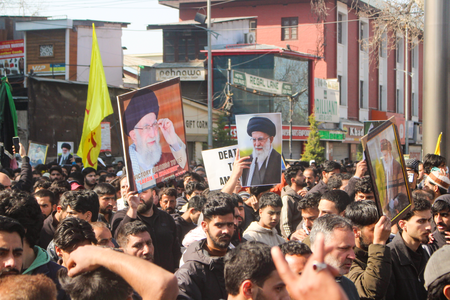
A significant number of people in the Kashmir Valley, particularly in Srinagar city, engaged in peaceful demonstrations following the death of Iranian Supreme Leader Ayatollah Ali Khamenei in a US-Israeli airstrike. Local leaders criticized the killing and urged for peace in Jammu and Kashmir. Protesters voiced their opposition to the US and Israel during processions while security forces maintained vigilance to prevent any disturbances.
The protests spontaneously erupted in various areas of Srinagar city, Budgam district, and other parts of the valley. Chief Minister Omar Abdullah expressed deep concern over the situation in Iran, emphasizing the importance of maintaining peace and avoiding actions that could escalate tensions. He called for allowing peaceful mourning in Jammu and Kashmir and urged restraint from the police and administration.
Former Chief Minister Farooq Abdullah and leaders of the National Conference (NC) condemned the US-Israeli attack on Iran. The NC headquarters issued a statement denouncing the assassination of Ayatollah Ali Khamenei, emphasizing the need for wisdom, restraint, and adherence to international law. Similarly, former Chief Minister and Peoples Democratic Party (PDP) president Mehbooba Mufti criticized the killing, highlighting the support from Muslim countries for the attackers.
Senior religious leader Mirwaiz Umar Farooq expressed sorrow and anger over the killing of Ayatollah Ali Khamenei, condemning the aggression against Iran. He called for unity within the Muslim community to protest against the brutality and ongoing aggression in the region. The Mutahida Majlis-e-Ulama (MMU) has announced a strike, urging people to observe it peacefully and with dignity.
No violent incidents have been reported in the Valley amid the protests.
