


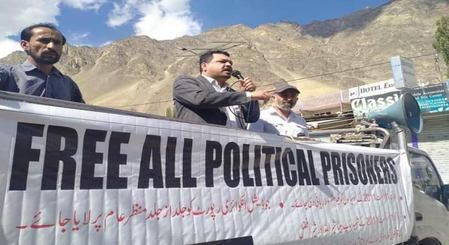
The protests in Pakistan-occupied Kashmir (PoK) have transitioned from a governance crisis to a legitimacy crisis, evident as schoolchildren, women, and families participate in sit-ins at Rawalakot’s Eidgah Ground. Organizers reported over 70,000 people at the demonstrations in Rawalakot, with protests spreading to various towns and villages. The movement now calls on the United Nations and chants “Pakistani forces out,” challenging administrative legitimacy.
The Joint Awami Action Committee’s deadline expired on June 23, 2026, without resolution, raising questions about governance failure turning into a legitimacy crisis. What started as grievances over electricity tariffs and wheat prices in 2023 has transformed into sustained civil resistance. The ban on JAAC, sedition charges against leaders, and other measures indicate a shift towards coercion over persuasion.
The response to the protests in PoK, including banning JAAC, sedition charges, and an internet blackout, suggests a move towards coercion as a primary response. The killing of JAAC member Shahzaib Habib on June 5, 2026, fueled wider mobilization instead of deterring it. The protests, originating from electricity bill grievances, have broadened into a movement questioning Pakistani authorities’ legitimacy.
Protesters in Rawalakot and Muzaffarabad are challenging the legitimacy of administrative authority in June 2026. Pakistan’s responses, from subsidies to anti-terrorism measures, have failed to address this challenge and have instead intensified it.
