


The India-led Quad, consisting of India, Australia, Japan, and the United States, has unveiled a framework to mobilize up to $20 billion in total investment from both government and private sectors. This initiative aims to enhance critical minerals supply chains and reduce reliance on concentrated global sources. The Quad Critical Minerals Initiative Framework focuses on fostering secure, diversified, and resilient supply chains crucial for advanced technologies and industrial resilience.
The partner countries under this framework will prioritize activities related to mining, processing, and recycling of critical minerals. They seek to align economic policy tools and investment frameworks to expedite the diversification of supply chains. Furthermore, the Quad nations will collaborate to identify projects linked to the Quad, such as those within member countries, operated by firms from Quad nations, or serving Quad markets to address significant supply chain gaps.
To facilitate strategic projects, the framework suggests leveraging export credit agencies, development finance institutions, and private capital mobilization. This includes utilizing guarantees, loans, equity participation, insurance, and offtake arrangements. Additionally, the Quad grouping plans to explore mechanisms to attract private investment and enhance the critical minerals development environment, including sharing best practices on permitting, licensing, and regulatory processes.
Moreover, the countries will work together on technology development and capacity building in geological mapping and resource assessment. They will also examine measures to combat non-market practices and unfair trade distortions in the critical minerals sector. A crucial aspect of the framework emphasizes the recycling and recovery of critical minerals, particularly from e-waste and scrap materials, to bolster secondary supply chains within Quad and partner countries.
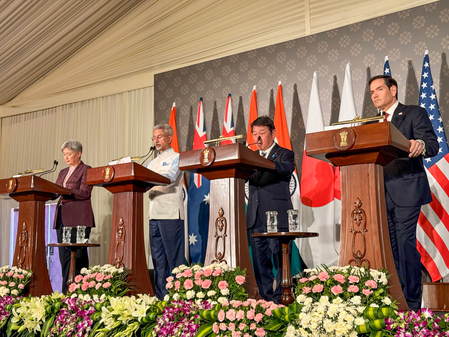
The meeting where this initiative was discussed saw the participation of key officials including External Affairs Minister S. Jaishankar, US Secretary of State Marco Rubio, Australian Foreign Minister Penny Wong, and Japanese Foreign Minister Toshimitsu Motegi.
