


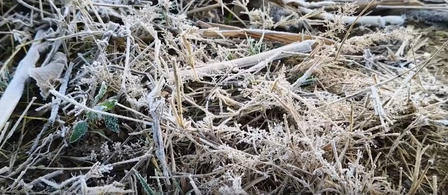
A sudden change in weather has brought Rajasthan into the grip of a severe cold wave, with temperatures dropping significantly across the state due to storms, rain, and hail. Lunkaransar in Bikaner recorded the lowest temperature of the season at 0.3 degrees Celsius on Friday night, leading to the formation of a thick layer of ice in various areas by Saturday morning. The cold winds sweeping through the state caused a rapid drop in daytime temperatures by up to 10 degrees Celsius, intensifying the chill even during the day.
Several districts, including Jaipur, Dausa, Alwar, Udaipur, and Nagaur, have been experiencing icy winds since Saturday morning, disrupting normal life with biting cold. Despite occasional sunshine, foggy conditions persisted in many places throughout the day, reducing sunlight and worsening the cold wave. The Meteorological Department forecasts mostly clear weather on January 24 and 25, but anticipates the activation of a new Western Disturbance on January 26 and 27, potentially bringing storms, rainfall, and dense fog to various regions of the state.
On Friday, more than 10 districts, such as Jaipur, Sikar, Ajmer, Bharatpur, Alwar, and Dausa, experienced rainfall and thunderstorms, with hailstorms reported in isolated locations. Following the rain, temperatures plummeted sharply across Rajasthan, with Fatehpur recording 2.3 degrees Celsius, Sirohi 4 degrees Celsius, Ajmer 6.9 degrees Celsius, and Nagaur at 0.5 degrees Celsius. The impact of the cold wave was particularly evident in border districts, with reports of ice on rooftops and vehicles in rural areas of Barmer and ice formation on vehicles in Thariyat village, Jaisalmer, where the temperature dropped to 4.5 degrees Celsius.
In Sikar’s Ranoli and Jhamawas villages, a visible sheet of ice covered grass and crops, raising concerns about potential damage to standing crops. Meteorological officials have cautioned that the ongoing cold winds, frost, and fog may continue to disrupt daily life and agriculture in the coming days as Rajasthan remains influenced by winter systems.
