


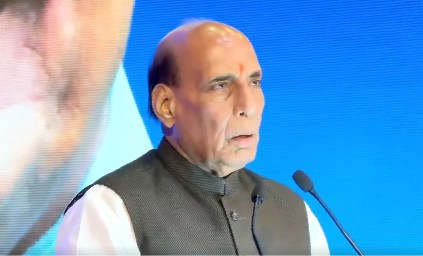
Defence Minister Rajnath Singh commended ‘Operation Sindoor’ as a testament to India’s strong defence readiness under the leadership of Prime Minister Narendra Modi. He highlighted the importance of self-reliance in defence, emphasizing the need for a robust ecosystem supporting research and innovation by startups and young innovators. Operation Sindoor showcased the bravery of the Indian Defence Forces in countering terrorism, reflecting the government’s firm stance against such threats.
Singh credited the government’s commitment to ‘Nation First’ and ‘Forces First,’ stressing the practical implementation of a ‘zero tolerance’ policy towards terrorism. He reiterated India’s capability to combat terrorism not only domestically but also beyond its borders. The Defence Minister lauded the role of India’s revamped defence sector in the successful execution of Operation Sindoor, citing it as a prime example of technological warfare and the government’s trust in domestic industries.
Advanced systems like Akash Teer, Akash missile system, and BrahMos played a crucial role in Operation Sindoor, supported by other cutting-edge equipment developed over the past 12 years. Singh outlined the government’s efforts towards self-reliance in defence, including the issuance of positive indigenisation lists by the Defence Forces and Defence Public Sector Undertakings. He announced plans for a new Positive Indigenisation List to further accelerate the vision of a self-reliant defence sector.
Highlighting the positive outcomes of self-reliance initiatives, Singh noted a significant increase in annual defence production and exports. He set ambitious targets for future defence production and exports, expressing confidence in achieving these goals. The establishment of defence industrial corridors in Uttar Pradesh and Tamil Nadu was highlighted as a significant step towards enhancing self-reliance, attracting substantial investments and creating employment opportunities.
