


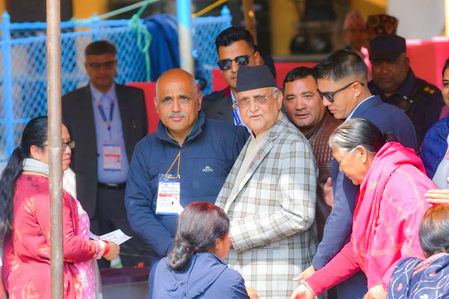
Most top leaders of traditional political parties are facing tough competition in Nepal’s parliamentary elections, with Rastriya Swatantra Party (RSP) candidates taking significant leads in two-thirds of the seats under the First-Past-the-Post (FPTP) system. In the 275-member House of Representatives, 165 members are elected through FPTP, while 110 seats are filled through proportional representation. The latest data from the Election Commission Nepal shows RSP candidates leading in 110 seats, with victories secured in three constituencies.
Based on the vote count, RSP’s prime ministerial candidate Balen Shah is leading by a substantial margin against former Prime Minister K P Sharma Oli in Jhapa-5. Shah has garnered 13,694 votes, while Oli trails with 3011 votes. Nepali Congress President Gagan Thapa is also behind RSP candidate Amaresh Kumar Singh in Sarlahi-4, despite high expectations following his recent election as party president.
Former Prime Minister Pushpa Kamal Dahal, coordinator of the Nepal Communist Party (NCP), has won in Rukum East, the party’s traditional stronghold. However, leaders like Nepali Congress General Secretary Pradip Paudel and former Deputy Prime Minister Bishnu Prasad Paudel are trailing RSP candidates by significant margins in their respective constituencies. Voters seem to be turning away from traditional parties, expressing discontent with the status quo.
