


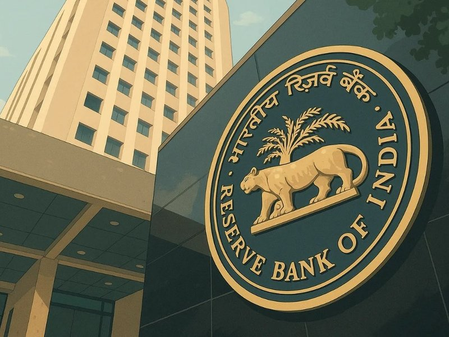
The Reserve Bank of India’s Monetary Policy Committee is anticipated to keep rates unchanged at its June meeting due to escalating inflationary pressures and external uncertainties. CareEdge Ratings highlighted that inflation worries have heightened, influenced by an anticipated below-normal monsoon and recent increases in retail fuel prices. The report also noted a significant uptick in WPI inflation, posing a risk of quicker pass-through to consumer prices, primarily driven by supply shocks rather than demand.
The report emphasized that the current surge in inflation is a result of supply disruptions, impacting the domestic growth outlook significantly as the economic repercussions of prolonged conflicts spread through various channels. The policy statement’s tone is deemed crucial, with potential policy rate hikes later in the year not ruled out if inflationary pressures persist, according to the ratings agency.
Both global and domestic bond yields have surged, while the USD/INR exchange rate has notably weakened since the conflict began. The report further stated that the future direction of the policy rate hinges on the MPC’s evaluation of evolving inflation dynamics and the sustainability of current price pressures in household expectations. In case of prolonged conflict and entrenched inflation risks in household expectations, rate hikes might occur by the end of CY26.
The real policy rate is forecasted to stay below its long-term average of 0.95% for three quarters before converging towards this level by Q1 FY28, as per the firm’s projections. It also predicted a 6.7% GDP growth for FY27, assuming crude oil prices average at USD 90/bbl. However, if conflicts persist and oil prices remain around $110/bbl, growth could dip closer to 6%.
In a separate report, CareEdge mentioned an upward trend in its CareEdge Debt Quality Index (CDQI) since November 2021. The index has continued to rise, reaching 97.15 in April 2026 from 96.89 in March 2026, driven by an increase in rated debt in higher investment-grade categories. An upward trend in the index signifies an enhancement in the quality of debt compared to the base year.
