


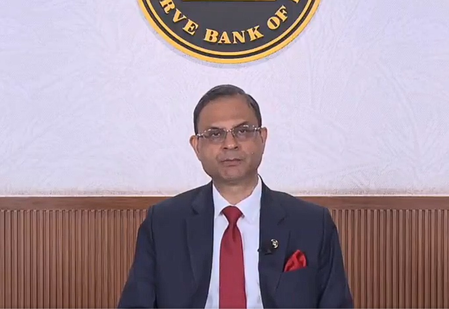
The Reserve Bank of India has increased its real GDP growth forecasts for the first and second quarters of 2026-27 to 6.9% and 7.0%, respectively, as announced by RBI Governor Sanjay Malhotra. Malhotra attributed this upward revision to factors such as the strong services sector, GST rationalization, favorable agricultural prospects, monetary policy easing, and low inflation, all of which are expected to boost private consumption.
Furthermore, Malhotra highlighted that investment activity is projected to remain robust, supported by high capacity utilization, favorable financial conditions, healthy balance sheets of financial institutions and corporates, strong credit growth, and the government’s emphasis on capital expenditure. The private sector is anticipated to attract new investments due to strong domestic demand, while services exports are predicted to stay resilient and merchandise exports are set to benefit from a potential trade agreement with the US.
Malhotra also mentioned that trade agreements with the European Union, New Zealand, and Oman are likely to enhance export diversification and strengthen the external sector. However, he cautioned about potential challenges from geopolitical tensions, global trade uncertainties, volatility in financial markets, and fluctuations in international commodity prices, which could pose risks to the outlook.
The RBI Governor further noted that based on the First Advance Estimates (FAE), the real GDP is estimated to grow by 7.4% year-on-year in 2025-26, with significant contributions from private consumption and fixed investment. While net external demand remained a drag due to higher imports compared to exports, real GVA growth of 7.3% was primarily driven by the services sector, resilient agriculture, and a rebound in manufacturing.
Regarding the global economy, Malhotra observed its resilience in 2025, supported by factors such as front-loading of trade, moderate tariff impacts, widespread fiscal stimulus, and accommodative monetary policies. He also commented on inflation trends, noting a gradual decline despite remaining above targets in some advanced economies. Additionally, he highlighted the upward trend in US yields, driven by positive economic data, and the volatility in financial markets due to fiscal challenges, geopolitical uncertainties, and divergent monetary policies.
