


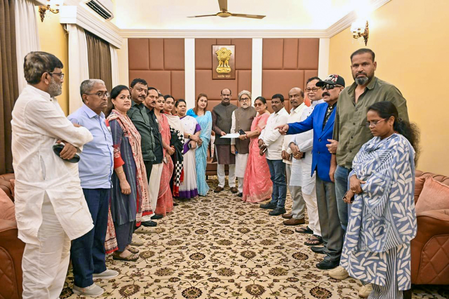
Rebel Trinamool MPs have decided to join the Nationalist Citizens Party of India (NCPI) instead of attempting to control Trinamool Congress’ Parliamentary party in the Lok Sabha. This move was influenced by two key factors, according to political observers and legal experts.
The first factor revolves around the Trinamool Congress constitution submitted to the Election Commission of India. This constitution outlines that the organization’s office-bearers hold more control than elected public representatives like MPs and MLAs. The revised constitution designates the national working committee, centered around Mamata Banerjee, as the supreme decision-making body within the party.
Political observers believe that the rebel MPs’ decision to join NCPI was prompted by the difficulty in gaining control of Trinamool Congress’ Parliamentary party, logo, and funds due to the party’s internal structure. The organization’s office-bearers, directly linked to Mamata Banerjee and indirectly to Abhishek Banerjee, hold significant influence.
Senior advocate Bikas Ranjan Bhattacharya suggests that the BJP orchestrated the rebel MPs’ strategy shift, evident from their meetings with BJP leaders in Delhi. The BJP’s aim appears to secure support from rebel Trinamool Congress MPs for passing crucial bills in Parliament. This strategic move aims to ensure BJP’s interests without risking the challenges of controlling Trinamool Congress’ Parliamentary party.
Despite successfully forming a rebel bloc in the West Bengal Assembly, the rebel MPs did not pursue a similar strategy in the Lok Sabha. Mamata Banerjee’s swift actions, dissolving old party committees and forming new ones, played a pivotal role in maintaining control over the party’s national working committee.
