


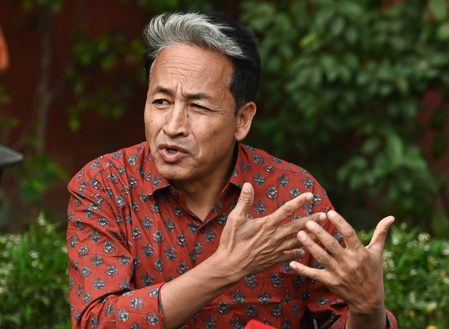
Following a recent meeting with the Centre, climate activist Sonam Wangchuk highlighted that elected representatives, not the Lieutenant Governor, will now decide on Ladakh’s finances. This decision stems from an understanding reached between the Central government, Ladakh Apex Body (LAB), and Kargil Democratic Alliance (KDA). The agreement paves the way for an elected chief minister in Ladakh with authority over bureaucracy, a legislative body, and protections under Article 371.
Wangchuk explained that Ladakh lacks the revenue to cover operational costs like salaries and pensions, leading to the need for the UT to manage its own budget. The proposed setup includes a UT-level Assembly where elected representatives will enact laws for Ladakh, ensuring safeguards for the environment, land, culture, and nature under Article 371. Notably, the chief minister will now have control over the bureaucracy, a significant shift from the previous system.
Under the new arrangement, elected leaders will have full control over Ladakh’s budget, a departure from the LG’s previous dominance in financial decisions. Wangchuk termed this shift as a positive step forward, emphasizing that the legislative body will hold financial, executive, and law-making powers. While details are still pending, Wangchuk mentioned ongoing studies to assess Ladakh’s capacity for full statehood, indicating that the current mechanism will be in place until further developments.
