


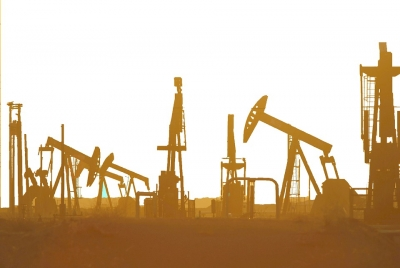
Strong services exports and steady remittance inflows could help mitigate the effects of escalating crude oil prices on India’s economy, given its heavy reliance on imported energy. India’s macroeconomic stability is significantly influenced by crude oil, especially as the rupee has recently depreciated amidst global oil price hikes.
India’s daily crude oil consumption of 5.3-5.5 million barrels contrasts sharply with its meager domestic production of about 0.6 million barrels per day, resulting in an import dependency of nearly 85 percent. Petroleum imports already constitute 25–30 percent of India’s total imports, making oil prices a pivotal factor in the country’s external balance.
The report highlights that a $10 rise in crude oil prices translates to an additional $12–15 billion in India’s annual import expenditure. If crude prices surge towards $120 per barrel and remain elevated until FY27, India’s oil trade deficit could soar to almost $220 billion, pushing the current account deficit beyond 3.1 percent of GDP.
Despite the historical trend of such scenarios leading to over 10 percent rupee depreciation, along with increased inflation and tighter liquidity, the report underscores a structural shift in India’s external sector. Robust services exports and substantial remittance inflows now act as a cushion against oil price shocks, potentially moderating the impact on the current account balance compared to previous cycles.
While crude price volatility persists due to global geopolitical tensions and supply dynamics, the report emphasizes the significance of monitoring whether oil prices will once again dominate India’s currency value, inflation rates, and capital flows in the upcoming quarters.
