


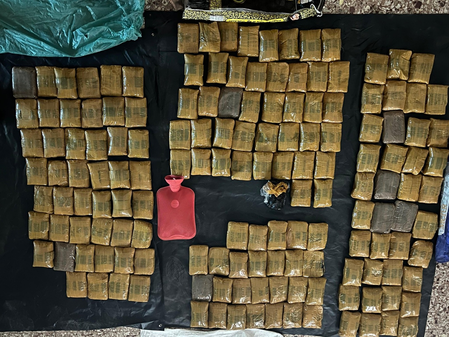
Indian agencies are intensifying efforts against drug cartels and narcotic smuggling, revealing a growing trend of pharmaceutical drug diversions in states like Bihar, West Bengal, Assam, and Tripura. Apart from targeting drug smugglers and their operations, authorities are closely monitoring chemical and pharmaceutical diversions, with West Bengal reporting the highest number of cases.
Between 2020 and 2024, West Bengal saw the highest number of seized codeine-based cough syrup bottles, totaling 27.50 lakh bottles. Similarly, Assam witnessed the highest tablet seizures in the country, with agencies confiscating 1.72 crore tablets during the same period. Tripura also faced significant seizures of tablets and codeine-based syrup bottles, reflecting evolving trends in narcotics smuggling.
The Narendra Modi government’s proactive stance against drugs led to the declaration of a ‘drug-free India,’ emphasizing the risks associated with inaction. Notably, drug traffickers are exploiting the highway infrastructure for smuggling, with Haryana emerging as a key transit corridor connecting various states for narcotics trafficking.
Authorities have identified Manipur as a high-risk trafficking area due to its connection to the Golden Triangle, a hub for high-value drug cartels. International players are involved in synthetic drug trafficking, particularly heroin, originating from Myanmar, Thailand, and Laos. Punjab remains a significant concern, with the ISI facilitating drug influx and establishing a robust network in the state.
In Punjab, a substantial number of arrests and heroin seizures were recorded, highlighting varying drug preferences across regions in India. The battle against drug trafficking necessitates extensive efforts, emphasizing the importance of coordination among Central and state agencies, and the Intelligence Bureau to combat this menace effectively.
