


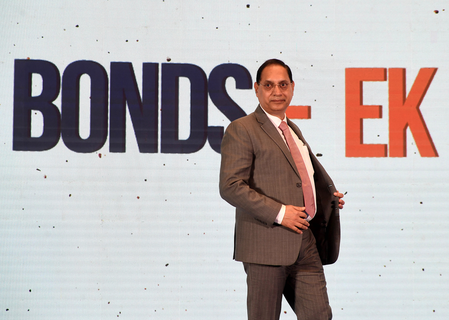
Alternative Investment Funds (AIFs) are now a significant part of India’s financial landscape, according to Securities and Exchange Board of India (SEBI) Chairman Tuhin Kanta Pandey. Speaking at the ‘IVCA Conclave 2026,’ Pandey highlighted the crucial role of AIFs in financing sectors essential for India’s economic strength. He stressed that AIFs are no longer at the periphery but are actively linking private capital to key sectors of the economy.
India currently boasts over 1,700 registered AIFs, with commitments totaling Rs 15.7 trillion and investments around Rs 6.4 trillion as of December 2025. This reflects a notable compound annual growth rate (CAGR) of almost 30% over the past five years. Pandey noted that the industry is not just attracting commitments but also converting them into tangible investments that contribute to economic growth.
Pandey emphasized that AIFs play a crucial role in directing capital to sectors that traditional finance often overlooks. By closely connecting private capital with productive enterprises, AIFs are supporting current growth while paving the way for future entrepreneurship, infrastructure development, and enterprise expansion. He underlined the importance of bank finance, public markets, and alternative capital pools to sustain India’s growth trajectory.
However, Pandey also pointed out challenges facing the AIF sector, including issues of mis-selling, product suitability, and the need for clear risk disclosure. He raised concerns about the flow of capital into innovation-driven sectors, particularly startups, urging the industry to enhance support for early-stage enterprises. Pandey stressed the significance of credible valuation practices, especially for early-stage and illiquid assets, to maintain investor confidence and ensure transparent price discovery.
