


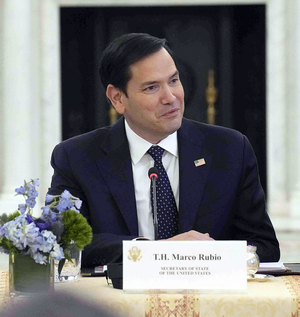
Secretary of State Marco Rubio emphasized that Washington does not require ideological loyalty tests from its partners. He stated that under President Trump, the US anticipates every country to act in its national interest without isolating themselves from any nation, including China. Rubio highlighted the pragmatic approach of the Trump administration in foreign policy, especially in competition with Beijing.
Rubio, during a press appearance with Hungarian Prime Minister Viktor Orban in Budapest, reiterated that the US does not demand countries to cut ties with any specific nation. He emphasized the importance of nations acting in their own interests while maintaining relationships with other countries. Rubio pointed out the necessity of US-China relations, noting President Trump’s upcoming visit to China in April.
The visit to Budapest included the signing of an agreement between the US and Hungary to enhance cooperation on Hungary’s civilian nuclear program. This visit signified a shift in Washington’s stance towards allies and partners with connections to China, emphasizing the importance of strategic engagement over isolation. Rubio rejected the notion that alignment with the US required countries to sever ties with other nations.
While advocating for engagement, Rubio also cautioned against overdependence on a single country or economy. He stressed the risks associated with relying heavily on one source for critical supply chains, emphasizing the need for diversification. The Secretary highlighted the vulnerabilities that arise from excessive reliance on a single economic partner.
Personal diplomacy played a central role in the US approach, with Rubio underscoring the close relationship between President Trump and Prime Minister Orban. This personal rapport influenced bilateral decisions, including waivers related to energy. Rubio praised the strong personal and working relationship between the two leaders, emphasizing its positive impact on US-Hungarian ties.
