


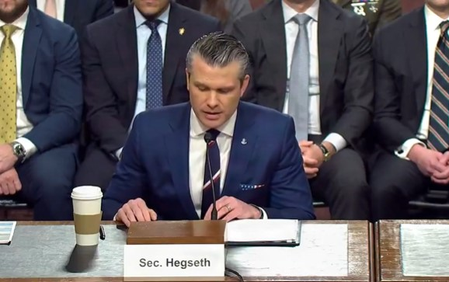
A Senate hearing witnessed intense clashes between US Secretary of War Pete Hegseth and lawmakers regarding the Iran war, escalating costs, and a proposed $1.5 trillion defense budget. Democratic and some independent senators at the Senate Armed Services Committee challenged the administration’s assertions of success in Iran and raised concerns about the magnitude of military expenditures.
Ranking Member Jack Reed criticized the administration for engaging in an “unwise” conflict without a clear strategy, highlighting the nation’s current challenging position due to casualties, damaged infrastructure, and economic repercussions. Hegseth defended the campaign’s effectiveness, stating that military objectives had been remarkably successful in degrading Iran’s defense capabilities.
The contentious hearing continued with senators pressing Hegseth on costs and outcomes. Senator Kirsten Gillibrand expressed public outrage over the war’s economic impact, questioning the increasing fuel and food prices burdening Americans. In response, Hegseth justified the mission as essential to counter Iran’s nuclear ambitions, emphasizing the potential costs of a nuclear-armed Iran.
Senator Mark Kelly voiced concerns about the extensive military operations and strain on US weapons stockpiles, pointing out the ongoing challenges in the war and the lack of clarity on its objectives. Hegseth assured that the military had achieved its goals and was swiftly rebuilding its capacity to address the situation.
Tensions escalated over civilian casualties and rules of engagement, with Senator Gillibrand seeking assurances on protecting civilians from strikes hitting schools and hospitals. Hegseth affirmed the US military’s commitment to avoiding civilian targets and implementing measures to minimize harm. Senator Tim Kaine raised legal issues, questioning the administration’s compliance with the War Powers Resolution and the need for congressional authorization.
Budgetary concerns further fueled the debate, with Senator Kelly questioning the justification behind the $1.5 trillion defense budget, while Hegseth defended the figure as a result of a meticulous process reflecting global threats and past underinvestment. Lawmakers also probed the Pentagon on the war’s costs, with estimates varying and raising skepticism about the actual financial implications.
Throughout the hearing, Joint Chiefs Chairman Dan Caine focused on providing impartial military advice, steering clear of political disputes. The clashes highlighted the deepening divisions in Washington over military strategy, the Iran conflict, and defense spending, amid broader geopolitical challenges and ongoing military commitments abroad.
