


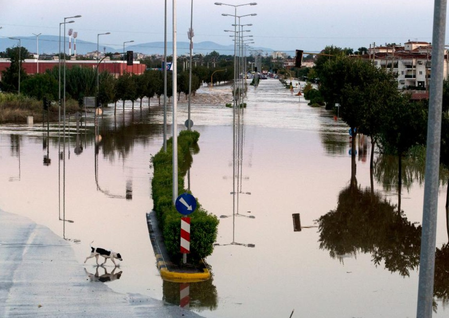
Two individuals lost their lives in Greece as a severe weather system swept through the country. In the Peloponnese peninsula, a Coast Guard officer died after being swept away by strong waves at the port of Astros Kynourias, sustaining severe head injuries. Additionally, in the southern Athens suburb of Glyfada, a woman was killed when floodwaters swept away her car.
The adverse weather front affected large parts of Greece, bringing heavy rainfall, gale-force winds, and snowfall in mountainous regions. Authorities declared a state of emergency, known as a “Red Code,” in at least six regions, including Attica. Residents were advised to stay indoors and adhere to official instructions.
In response to the weather conditions, schools in Attica and other impacted areas were closed as a precautionary measure. Widespread traffic disruptions were reported across the country, with numerous motorists stranded in severely affected areas. Furthermore, ferry services were halted at ports nationwide due to the inclement weather.
The Fire Brigade received over 600 emergency calls, primarily for evacuations from flooded streets, clearing fallen trees, and pumping water from residences and businesses. Agricultural land and livestock facilities suffered significant damage due to the flooding.
The recent severe weather in Greece follows a previous disruption on January 10 when strong winds led to ferry service disruptions at the port of Piraeus, inconveniencing travelers. While no general sailing ban was enforced, some ferry companies canceled routes due to the adverse weather conditions.
Greece continues to face challenging weather conditions characterized by gale-force winds, heavy rainfall, and a notable temperature drop. Wind speeds in parts of the Aegean and Ionian seas have reached up to nine on the Beaufort scale.
