


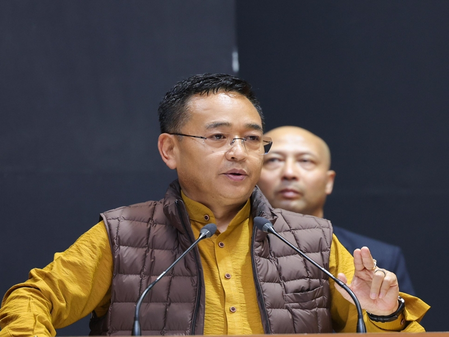
Sikkim Chief Minister Prem Singh Tamang walked for about 14 minutes from his official residence to attend an official function at Manan Kendra. This act aimed to emphasize the importance of fuel-saving, reducing unnecessary expenses, and responsible governance. The move coincided with the state government’s launch of measures related to fuel conservation, aligning with Prime Minister Narendra Modi’s call for disciplined governance and economic prudence.
The Chief Minister’s decision to walk instead of using an official convoy was a symbolic gesture to showcase that fuel-saving initiatives should start with leadership and personal actions. This step was taken to demonstrate that such measures should not just be administrative directives but should also reflect in personal conduct. Tamang had previously attended the Sikkim Kalakar Bharosa Sammelan on foot, interacting with citizens during the commute, reinforcing the message of personal discipline in leadership.
As part of the new measures, the state government announced a 50% reduction in the Chief Minister’s motorcade and the implementation of odd-even vehicle regulations for both government and private vehicles. However, taxis and emergency services are exempted from these regulations. The Home Department issued a notification on May 14 regarding these measures, directing various government bodies to ensure efficient use of resources and minimize fuel consumption.
Government departments, autonomous bodies, and public sector undertakings in Sikkim have been instructed to optimize the use of government assets and reduce fuel consumption. Officials and employees are encouraged to utilize public transport, minimize unnecessary vehicle usage, and rely more on virtual meetings and digital coordination. They are also advised to walk for nearby meetings and official engagements whenever possible. These measures aim to enhance efficiency, accountability, and disciplined governance while ensuring the optimal utilization of public resources.
The Chief Minister’s actions reflect the state government’s commitment to translating the call for fuel savings and reducing unnecessary expenses into tangible administrative practices and public involvement.
