


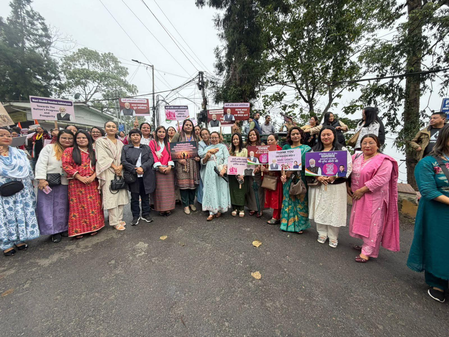
Sikkim Chief Minister Prem Singh Tamang commended a significant rally organized by women in Sikkim in support of the Nari Shakti Vandhan Adhiniyam (Women’s Reservation Bill). He described the rally as a powerful display of unity, awareness, and collective determination. The Chief Minister expressed immense pride in witnessing women from all walks of life coming together to advocate for women’s empowerment.
Tamang highlighted the rally as a representation of the strength and resolve of women in Sikkim, emphasizing their increasing involvement in shaping public discussions. He extended his best wishes to the participants, recognizing their active engagement and dedication to the cause. The Chief Minister emphasized the importance of such initiatives in fostering a more inclusive and empowered society.
Describing the Nari Shakti Vandhan Adhiniyam as a groundbreaking reform, Tamang praised its passage as a historic milestone for women’s empowerment in India. He credited Prime Minister Narendra Modi for initiating the bill, hailing it as a significant achievement in promoting gender equality in the 21st century. Tamang expressed hope that the momentum generated by such public engagement would continue to drive progress and unity in the future.
The Chief Minister stressed the necessity of sustained efforts and collective determination to ensure meaningful representation and opportunities for women across various sectors. He also conveyed his greetings to the people of Sikkim on the occasion of Mata Tirtha Aunsi, wishing for peace, prosperity, and continued success. Tamang reaffirmed the government’s commitment to supporting initiatives led by women and promoting inclusivity, empowerment, and equal participation in the state’s development journey.
The Women’s Reservation Bill, officially known as the Nari Shakti Vandan Adhiniyam, introduced by the Centre under the leadership of PM Modi, aims to reserve 33% of seats for women in the Lok Sabha and state legislative assemblies. The legislation is viewed as a significant reform addressing the historical underrepresentation of women in Indian politics. By enhancing women’s participation in lawmaking, the Bill seeks to make governance more inclusive and representative, with its implementation linked to the delimitation exercise to redraw constituency boundaries based on population changes.
