


Despite receiving sufficient funding and gaining provincial autonomy post the 18th Amendment in Pakistan, Sindh is experiencing policy failure and neglect, as per a recent report. The ‘Household Integrated Economic Survey 2024-25’ highlights a concerning disparity in development within Pakistan, with Sindh lagging behind despite the advancements in other regions. For instance, Sindh has the highest percentage of households (14%) without access to toilet facilities, surpassing even Balochistan, known as a less developed province.
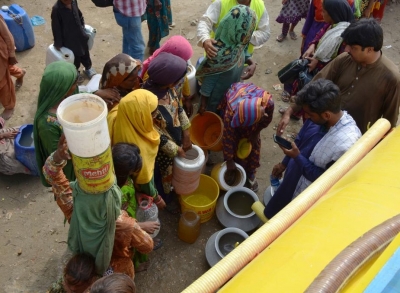
Rural areas in Sindh predominantly rely on hand pumps for drinking water, distinguishing it from other provinces. Moreover, there exists a significant 10% literacy gap between Sindh and Punjab, with nearly 40% of school-aged children in Sindh not enrolled in schools. Additionally, vaccination rates in Sindh are lower, with only two-thirds of children fully vaccinated compared to 79% in Punjab.
The report also points out that despite political stability in Sindh due to consistent party majorities in elections, the province still faces developmental challenges. It emphasizes the necessity for progress across all provinces to achieve genuine national advancement. Furthermore, there is a call for empowering provinces to raise adequate resources to alleviate the fiscal deficit at the federal level.
It is suggested that Balochistan and Khyber Pakhtunkhwa should receive their entitled shares from excise duties on natural gas and electricity, as outlined in the Constitution. Presently, these provisions are not being effectively implemented, leading to disparities in revenue distribution. Despite possessing abundant natural resources, provinces like Balochistan and Khyber Pakhtunkhwa receive disproportionately low shares of revenue due to their smaller populations.
Following the 18th Amendment, provinces have the authority to impose various taxes, including wealth tax and inheritance tax. However, there is a lack of willingness at both federal and provincial levels to enforce these taxes on the affluent. This reluctance hampers the effective utilization of fiscal tools available to the provinces.
