


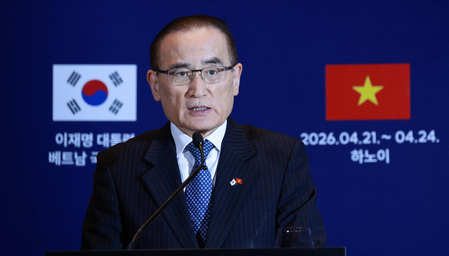
South Korea’s President Lee Jae Myung and Vietnam’s top leader To Lam have agreed to enhance collaboration in energy and infrastructure, with a focus on Vietnam’s potential revival of its nuclear power program. During their recent summit talks, Lam, who is also the general secretary of the Communist Party, expressed support for Korean companies’ involvement in Vietnam’s energy transition, including the potential construction of a nuclear power plant, as confirmed by National Security Adviser Wi Sung-lac.
Vietnam had previously put on hold its plans to build a nuclear power plant in Ninh Thuan province in 2016 due to financial constraints. However, the country is now contemplating reintroducing nuclear power to its energy mix to meet the increasing demand for electricity. Discussions at the summit centered on the feasibility and associated risks of the Ninh Thuan project.
On the sidelines of the summit, the Korea Electric Power Corporation and Vietnam National Industry-Energy Group signed two memorandums of understanding for joint feasibility studies and financing related to potential nuclear power projects. The success of Vietnam’s nuclear power program is seen as contingent on South Korea’s ability to offer suitable financing packages to meet Hanoi’s requirements, according to Kim Yong-beom, the presidential chief of staff for policy.
Kim emphasized the importance of addressing Vietnam’s energy needs, given its substantial population and economic growth. The government is committed to exploring financing solutions in collaboration with the Korea Electric Power Corp, policy lenders, and commercial banks. Additionally, both countries identified critical mineral supply chains as a key area for cooperation and agreed to establish a technology cooperation center for these supply chains.
In addition to energy and infrastructure, Lee and Lam discussed regional security and global matters, including the conflict between the United States and Iran. Both leaders affirmed their commitment to working together for peace and prosperity globally. They also highlighted the significance of peaceful coexistence on the Korean Peninsula for the benefit of the international community.
