


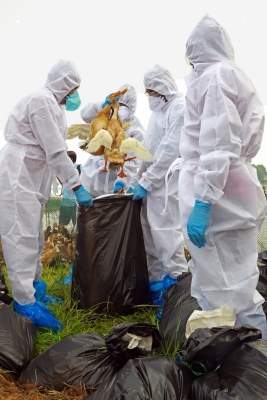
South Korea has confirmed two new cases of highly pathogenic avian influenza at poultry farms, bringing this season’s total to 24 cases. One case was identified at a chicken farm in Yeongam county, 380 kilometers south of Seoul, housing around 33,000 chickens. Another case was reported in Asan, located about 85 km south of Seoul. Authorities have implemented measures such as culling animals and restricting access to the affected farms to contain the outbreak.
The surge in egg prices has raised concerns about potential supply disruptions due to the avian influenza spread. Recent industry data revealed that the average retail price of a carton of 30 large eggs exceeded 7,000 won (US$4.83) last week, marking a significant increase. Egg prices had been stable in the 6,000-won range until last month before surpassing the 7,000-won mark. Statistics also indicated a 7.3 percent rise in egg prices in September compared to the previous year, outpacing the overall livestock product price increase of 5.3 percent.
In the latest update, South Korea recorded three new cases of highly pathogenic avian influenza, bringing the total number of infections this season to 21. Notably, the winter season has seen a rise in outbreaks at egg-laying hen farms, with 11 cases reported, nearly double the number from the same period last year. The agriculture ministry reported that approximately 3 million egg-laying hens have been culled this winter following confirmed outbreaks, impacting the nation’s daily egg production of around 50 million eggs by an estimated 3 to 4 percent.
