


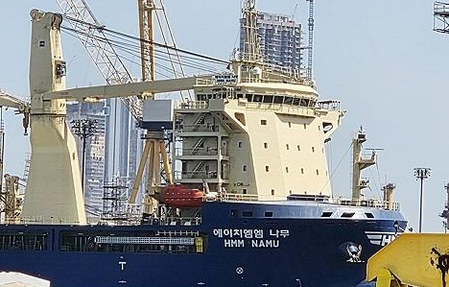
A South Korean-operated cargo vessel, the Namu, was hit by two unidentified flying objects in the Strait of Hormuz, leading to an explosion and fire. Fortunately, the 24 crew members, including six South Koreans, escaped unharmed despite a 7-meter-wide rupture in the hull. The incident has prompted discussions in Seoul about potentially joining U.S.-led missions to protect navigation in the strait.
The South Korean foreign ministry, following an investigation, has refrained from attributing the attack to any specific party, citing the need for further analysis. The incident has raised concerns about the safety of international sea lanes and the potential for future disruptions in the region. Experts suggest that this event could push Seoul towards participating in the U.S.-proposed Maritime Freedom Construct to enhance security measures in the area.
The U.S. has urged South Korea to consider joining efforts to secure the Strait of Hormuz, with President Donald Trump suggesting Iranian involvement in the attack. South Korea is evaluating various options, including non-combat measures like intelligence sharing, before committing to any military deployment in the region. The decision-making process involves considerations of international law, regional security, and existing alliances.
