


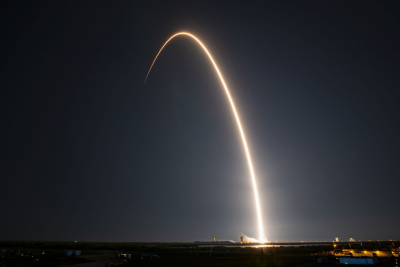
A South Korean Earth-observation satellite has entered low-Earth orbit after a successful launch from a U.S. space base in California. The satellite, named Compact Advanced Satellite (CAS) 500-2, was launched by a SpaceX Falcon 9 rocket from Vandenberg Space Force Base. It separated from the rocket about an hour after liftoff and was placed into orbit, as confirmed by the Korea AeroSpace Administration (KASA).
The CAS500-2, designed for disaster monitoring and agricultural observation, made its first communication with a ground station in Norway 15 minutes after separating from the rocket. It is set to work alongside another satellite, CAS500-1, starting in the latter half of this year. Originally planned for a 2022 launch on a Russian Soyuz rocket, the deployment was postponed due to Russia’s actions in Ukraine.
Weighing 534 kilograms, the CAS500-2 boasts high-resolution Earth observation capabilities with ground resolutions of 0.5 meters in black-and-white images and 2 meters in color. Key components of the satellite were developed using domestic technology, enhancing South Korea’s space technology independence. KASA Administrator Oh Tae-seog emphasized that the successful launch signifies a significant step in advancing the private-led space era and strengthening the country’s satellite technology competitiveness.
