


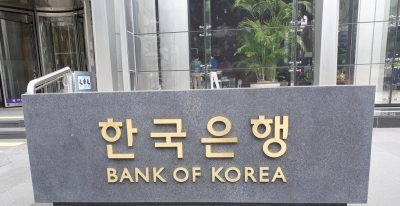
South Korea’s central bank decided to keep its benchmark interest rate steady at 2.5 percent due to ongoing uncertainties in the Middle East. The Monetary Policy Board of the Bank of Korea (BOK) made this decision in Seoul, with the new BOK Gov. Shin Hyun-song presiding over his first meeting.
This marks the eighth consecutive meeting where the central bank has opted to maintain the interest rate, despite being in an easing cycle. Since October 2024, the BOK has reduced the benchmark rate by 100 basis points to 2.5 percent to support economic growth.
The BOK emphasized the need to monitor the situation in the Middle East closely before considering any changes to the interest rate. The central bank mentioned that future rate hikes might be necessary as the economy shows signs of improvement, driven by strong semiconductor exports and increasing consumer prices.
The decision to keep the rate unchanged was supported by five board members, while two members suggested raising it to 2.75 percent. BOK Gov. Shin reiterated the bank’s intention to raise the base rate at an appropriate time, considering factors like inflation, economic recovery, and financial stability.
The Korean won has been weakening against the U.S. dollar, prompting authorities to address foreign exchange volatility. Despite challenges from the U.S.-Iran conflict, South Korea’s economic growth forecast for 2026 has been revised upward to 2.6 percent, supported by robust exports and the semiconductor sector.
