


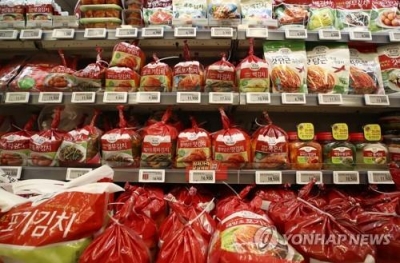
South Korea achieved a record high in food and agriculture exports, reaching $13.62 billion in 2025. The surge was fueled by the global demand for Korean food products like “ramyeon” noodles, sauces, and fruits. The Ministry of Agriculture, Food and Rural Affairs reported that exports in the “K-Food Plus” sector grew by 5.1 percent from the previous year to set a new annual high.
Outbound shipments of agricultural and food products totaled $10.41 billion, marking the first time it surpassed the $10 billion mark and the 10th consecutive year of growth. Additionally, exports of agriculture industry-related products, including farm machinery and veterinary medicine, reached a record high of $3.22 billion in 2025, showing an 8 percent increase from the previous year. The ministry credited the remarkable export performance to the rising demand for Korean instant noodle products, sauces, kimchi, ice cream, strawberries, and pork.
The data revealed that ramyeon exports hit $1.5 billion for the first time, surging by 21.9 percent year-on-year. Similarly, exports of sauces increased by 4.6 percent to $411.9 million, while ice cream shipments rose by 21.6 percent to $111.3 million. Grape exports saw a significant surge of 46.3 percent to $84.7 million, and strawberry exports grew by 4 percent to $72 million.
In other news, South Korea’s central bank is anticipated to maintain its policy rate unchanged this week to stabilize the weakening currency and address the volatile property market. A survey conducted by Yonhap Infomax indicated that all 25 local analysts and experts polled expect the Bank of Korea (BOK) to keep its benchmark rate at 2.5 percent during its upcoming policy meeting. Another survey by Yonhap News Agency with six additional experts also revealed unanimous expectations for a rate freeze this month. The BOK’s Monetary Policy Board has kept the key rate steady for four consecutive meetings up to November, following the easing cycle that began in October 2024.
