


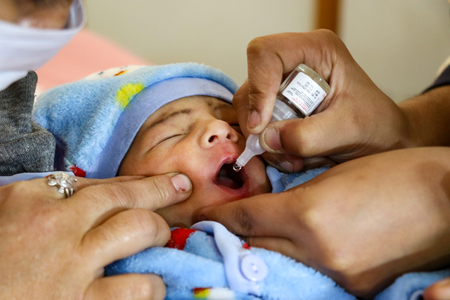
South-East Asia Region, with a quarter of the world’s population, has celebrated 15 years since its last wild poliovirus case, as confirmed by the World Health Organization. The region, through strong leadership, healthcare workforce, and partnerships, has maintained its polio-free status and is using lessons from the polio program to enhance overall public health progress.
Dr. Catharina Boehme, WHO South-East Asia Region’s Officer-in-Charge, emphasized the remarkable achievement of transitioning from polio endemicity to sustained polio-free status. The last reported case of wild poliovirus in the region was an 18-month-old girl paralyzed in West Bengal’s Howrah on January 13, 2011.
Following this case, a comprehensive response was initiated, leading to the official declaration of the region as polio-free by WHO on March 27, 2014. The region continues to be vigilant against poliovirus importation, ensuring children are protected through vaccination against a disease that previously caused significant paralysis and fatalities.
In efforts to maintain its polio-free certification, the Region collected and tested over 50,000 stool samples in 2025 across various countries. Surveillance standards exceed requirements, with 13 WHO-accredited polio laboratories conducting testing. Additionally, environmental surveillance is ongoing in 93 high-risk population sites in five countries.
Maintaining immunization coverage above 90% for bivalent oral polio vaccine and inactivated polio vaccine is a priority. Dr. Boehme stressed the importance of sustaining high immunization coverage, robust surveillance, and rapid response capabilities to prevent polio and other vaccine-preventable diseases. WHO remains dedicated to assisting countries in safeguarding every child through strong immunization systems and advancing disease elimination efforts in the Region.
