


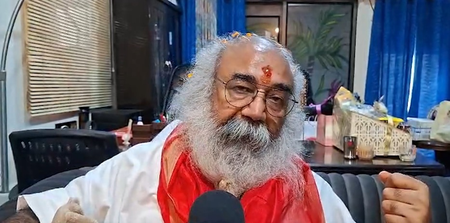
Spiritual leader Acharya Pramod Krishnam emphasized that only Hindus have the right to discuss the Shri Ram Janmabhoomi Temple and Lord Shri Ram. He criticized the opposition for lacking the moral authority to comment on the temple’s construction, as they did not support it. Krishnam accused opposition parties of exploiting the Ram Temple issue for political advantage in the upcoming 2027 Uttar Pradesh Assembly elections.
Krishnam supported Uttar Pradesh Chief Minister Yogi Adityanath’s statement alleging that previous governments had planned attacks on temples. He accused the Samajwadi Party of attempting to divide Hindus to secure victory in the elections. Krishnam highlighted the importance of unity among Hindus to prevent such divisive tactics.
Regarding Samajwadi Party president Akhilesh Yadav’s comparison of Sanatan Dharma and socialism, Krishnam dismissed the connection, stating that Yadav does not embody socialist ideals. He likened Yadav’s relationship with socialism to that of Rahul Gandhi with Mahatma Gandhi, suggesting a lack of alignment with the core principles.
Krishnam praised the Union Home Ministry’s guidelines on ‘Vande Mataram,’ considering the slogan as a symbol of India’s freedom movement. He urged all Indians to embrace and uphold the significance of ‘Vande Mataram’ as a unifying expression of patriotism. Krishnam believed that adherence to the slogan would strengthen national unity and reinforce the essence of Indianness.
In response to controversial remarks by All India Imam Association President Sajid Rashidi, Krishnam criticized Rashidi for allegedly disregarding Islam’s teachings on respecting women. He urged Rashidi to deepen his understanding of Islam to truly appreciate and uphold its values, particularly regarding women’s dignity and rights. Krishnam emphasized the importance of respecting diverse perspectives within religious communities to foster mutual understanding and harmony.
Regarding the inclusion of non-Muslims in Waqf Committees, Krishnam advocated for the participation of every Indian in boards established under the Indian Constitution. He emphasized that such committees belong to the entire nation, and every citizen should have the opportunity to contribute and serve in these capacities.
