


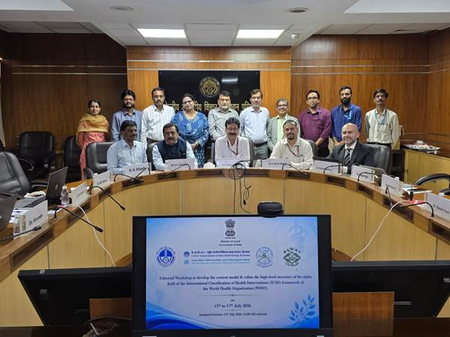
Incorporating standard health terminologies is crucial for integrating Ayush interventions into digital health systems, aligning with modern health informatics standards, as per Vaidya Rajesh Kotecha, Secretary of the Ministry of Ayush. The Ministry has initiated a five-day workshop on the WHO-ICHI Framework for Ayurveda, Siddha, and Unani systems, a significant move towards positioning India’s traditional medicine within global digital health and universal health coverage frameworks. Kotecha emphasized that this effort signifies a transformative shift in integrating India’s traditional medical systems into the global scientific, digital, and policy landscape.
Dr. Kavita Jain, Joint Secretary of the Ministry of Ayush, highlighted the long-term policy implications of integrating traditional practices into digital records and global health structures. The workshop, organized by the Central Council for Research in Ayurvedic Sciences (CCRAS) through the National Institute of Indian Medical Heritage (NIIMH) in Hyderabad, aims to establish a comprehensive hierarchy of National Health Intervention Codes (NHIC) for Ayurveda, Siddha, and Unani systems. This collaborative effort involves scientific experts, institutional leaders, and international informatics professionals in finalizing standardized codes for traditional medicine.
Dr. Geeta Krishnan, Unit Head of GTMC Jamnagar, shared the global operational context, with insights from WHO representatives Dr. Robert Jakob and Dr. Stephane Espinosa focusing on global interoperability and digital informatics alignment. The workshop, building on drafts from consultative meetings in May 2026, covers a range of specialties, therapies, and procedures for Ayurveda, Siddha, and Unani systems. The repository currently includes specialties, therapies, and procedures for each system, as detailed in the statement.
