


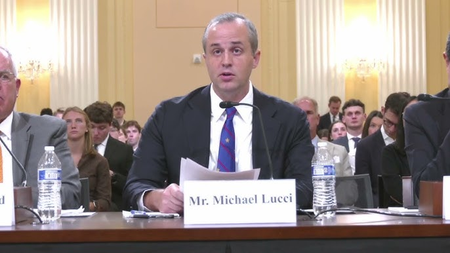
State governments in the United States are increasingly becoming key battlegrounds in the strategic rivalry with China, as per warnings from lawmakers and security experts. Concerns were raised during a House Select Committee hearing on the Chinese Communist Party, highlighting China’s focus on local institutions, universities, critical infrastructure, and state legislatures. Michael Lucci, the founder of State Armor, emphasized that Chinese influence operations have expanded to exploit vulnerabilities at the state and local levels, posing security challenges traditionally handled by federal agencies.
Witnesses at the hearing pointed out various instances of Chinese efforts to position assets near sensitive military facilities, such as through land purchases near US Air Force bases and the placement of telecommunications equipment near strategic sites. Additionally, they highlighted the significant targeting of American universities by China for influence and technology acquisition, labeling it a national security crisis. Some federally funded research programs were noted to have ties with Chinese institutions linked to the country’s military and defense industry.
States like Texas and Nebraska have responded to these threats by implementing measures to safeguard critical infrastructure, enhance research security, limit foreign ownership near military installations, and counter transnational repression. Texas, for instance, has set up a state cyber command to address cyber threats affecting local communities, while both Texas and Nebraska have passed laws aimed at curbing foreign influence and safeguarding research institutions. However, lawmakers supporting such measures have reportedly faced pressure from Chinese-affiliated organizations and businesses.
According to Michael Lucci, some legislators advocating for these security measures have encountered economic threats and online intimidation. He characterized this as a “pressure campaign” orchestrated by a non-democratic entity within the democratic system, rather than normal advocacy. Committee Chairman John Moolenaar echoed these concerns, emphasizing that China perceives state legislatures, municipal governments, universities, and community organizations as vulnerable targets for influence operations due to their relatively lower oversight compared to federal institutions.
The United States has broadened its response to Chinese activities beyond traditional military and diplomatic realms. Both federal and state authorities have increased scrutiny on foreign investments, land acquisitions near military facilities, and research collaborations involving sensitive technologies.
