


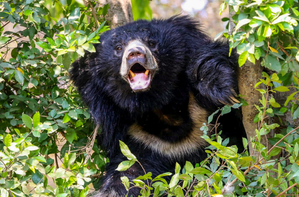
A unique dietary study conducted in the Aravalli mountains of Rajasthan reveals that sloth bears’ seasonal diet and seed dispersal are benefiting certain plant species. Notably, the germination of the non-native invasive shrub Lantana camara was observed solely from seeds found in bear scat.
Furthermore, the study indicates that seeds of several native fruiting plants also exhibited improved germination after being consumed by the bears, suggesting a role in shaping the vegetation of vast landscapes like the Aravallis. The research sheds light on the poorly understood contribution of large omnivorous mammals in influencing vegetation in regions such as the Aravallis.
The study, titled ‘Seasonal diet and seed dispersal by Sloth bears Melursus ursinus in western India,’ has been accepted for publication in the international journal Biotropica. It was carried out by researchers Utkarsh Prajapati, K.S. Gopi Sundar, and Vijay Kumar Koli, aiming to explore the multifunctional roles of large omnivorous mammals in tropical ecosystems.
Seasonal variations in the sloth bear diet were analyzed, with fruits being a primary component during winters and insects becoming more prominent in summers. The selective fruit consumption by the bears, not solely based on availability, indicates a preference in foraging habits. The study underscores the significance of understanding how large omnivores like sloth bears influence plant regeneration and landscape-level vegetation dynamics in tropical seasonal ecosystems.
