


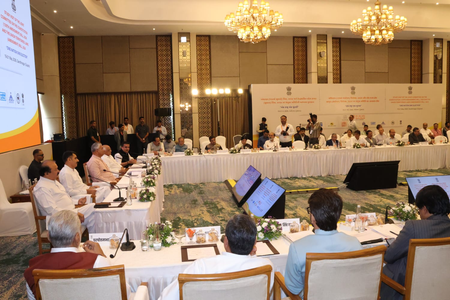
As the Joint Parliamentary Committee (JPC) wrapped up its visit to Gujarat regarding the “One Nation, One Election” proposal, strong backing emerged from educational institutions and industry bodies. They highlighted that frequent polls were disrupting academic activities, labor availability, and economic operations in the state. The committee, led by BJP MP P. P. Chaudhary, is reviewing bills aiming to synchronize Lok Sabha and state assembly elections.
During the consultations in Gandhinagar, the JPC engaged with various stakeholders, including political parties, state officials, educational institutions, economists, industry representatives, and civil society groups. Discussions mainly focused on the adverse effects of multiple elections on governance, education, industry, and migrant labor movement. Gujarat University and the Confederation of Indian Industry (CII) Gujarat presented detailed assessments supporting the idea of simultaneous elections to reduce institutional and economic burdens.
Gujarat University emphasized that the current staggered election system led to administrative disruptions, academic schedule disturbances, and significant workforce deployment for election duties. The university’s submission highlighted the negative impact on teaching, examinations, research activities, and student services. It also referenced a high-level committee’s findings suggesting that synchronized elections could boost GDP growth and reduce public expenditure substantially.
Industry bodies like FICCI, CII, and Gujarat Chamber of Commerce and Industry expressed concerns about the potential impact of simultaneous elections on labor movement, especially migrant workers. They proposed a “Migrant Voter Facilitation Framework” to address these challenges, recommending measures like remote voting facilities, early voting windows, and paid election leave for employees. The industry stressed the need for a phased implementation approach to ensure a smooth transition to synchronized elections.
