


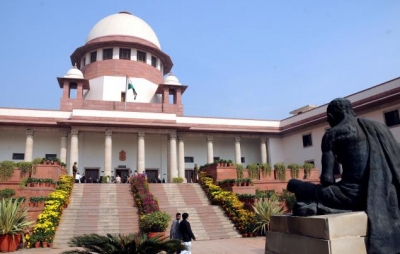
The Supreme Court expressed worry about the ongoing prolonged litigation in environmental cases involving air pollution in Delhi and the Taj Trapezium Zone. The court noted the continuous filing of applications, creating a false impression that cases decided long ago were still pending. Several matters from the 1980s have been decided, but new applications keep them listed as ongoing proceedings.
The bench, led by Chief Justice of India Surya Kant, highlighted the issue of numerous pending applications, particularly in cases related to MC Mehta. The court directed that major MC Mehta matters be listed on separate dates, with all pending applications to be addressed independently. It emphasized the need to reclassify cases to avoid treating resolved petitions as ongoing disputes.
In a related development, the Supreme Court acknowledged the Commission for Air Quality Management’s efforts to address the air quality crisis in Delhi-NCR. The court mandated the Delhi government and its agencies to submit a detailed action plan for implementing long-term solutions proposed by the Commission.
The apex court also instructed the Union ministries of Environment, Forest and Climate Change, Power, and Petroleum and Natural Gas to present a joint proposal for relocating coal-based industries out of the Delhi-NCR region. It sought responses on prohibiting new coal-based thermal power plants near Delhi and directed neighboring state governments to seek feedback from stakeholders, including coal-based industries.
