


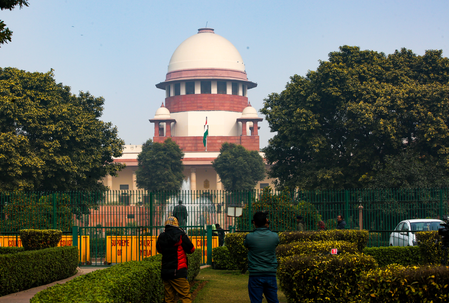
The Supreme Court has instructed the Delhi government, municipal bodies, and NCR state governments to present concrete action plans based on the Commission for Air Quality Management’s long-term recommendations. These measures aim to address the ongoing air pollution crisis in Delhi and the surrounding National Capital Region. The court was addressing a Public Interest Litigation concerning the deteriorating air quality in the region.
Additional Solicitor General Aishwarya Bhati, representing the CAQM, informed the court about the expert committee’s 15 long-term proposals. The committee has highlighted the vehicular sector as a major contributor to the region’s air pollution. The suggested measures include phasing out highly polluting vehicles, enforcing an upgraded Pollution Under Control regime, expanding public transport like Metro and rail systems, and revising the Electric Vehicle policy.
The CAQM has also outlined the responsible agencies for implementing these measures and recommended using Environment Compensation Charge funds for effective execution. The Supreme Court, led by CJI Kant, emphasized the importance of immediate implementation of these long-term measures without entertaining objections. It urged all stakeholders to submit their action plans with compliance timelines promptly.
Senior advocate Aparajita Singh, acting as amicus curiae, urged the court to set specific timelines for implementation to prevent further deterioration of the pollution situation. The Supreme Court highlighted the need for addressing traffic congestion at Delhi’s border entry points and emphasized the timely adoption of advanced technologies. It directed concerned agencies, including the Municipal Corporation of Delhi, to justify any delays in implementing the recommendations promptly.
The court stressed the submission of action plans and compliance timelines without objections from the agencies involved. It also invited suggestions from the amicus curiae for additional long-term measures to combat the air pollution crisis, with the assurance that the CAQM would consider and incorporate them if necessary. The case is scheduled for further hearing in four weeks.
